A long time ago, beside a wide pond filled with lotuses, there lived a gentle spirit who watched over the trees and animals. The pond was home to many fish, and nearby lived a crane.
One hot summer, the water in the pond began to dry up. The fish worried about what would happen if their home disappeared. The crane noticed their concern and came up with a plan.
He perched on the bank, looking thoughtful. “Friends,” said the crane, “I see your pond is getting smaller. If you’d like, I can carry you to a bigger, deeper pond filled with cool water and plenty of food.”
The fish were doubtful. “Why would a crane help fish?” they whispered. “Are you tricking us?”
The crane replied, “If you don’t believe me, send one of your friends with me to see.”
The fish agreed and chose a wise, older fish to go. The crane flew him to a nearby pond. It was large, with cool water and blooming lotuses. The fish swam happily for a while, then the crane carried him back home.
“It’s true!” the old fish announced. “The pond is beautiful. We’ll be safe there.”
So, little by little, the fish allowed the crane to carry them away. But the crane was not as kind as he seemed. Instead of taking them to the big pond, he left them stranded on the riverbank, where they could not return to the water.
At last, only one creature remained in the shrinking pond: a crab.
“Come along, Crab,” said the crane. “I’ll take you to the big pond too.”
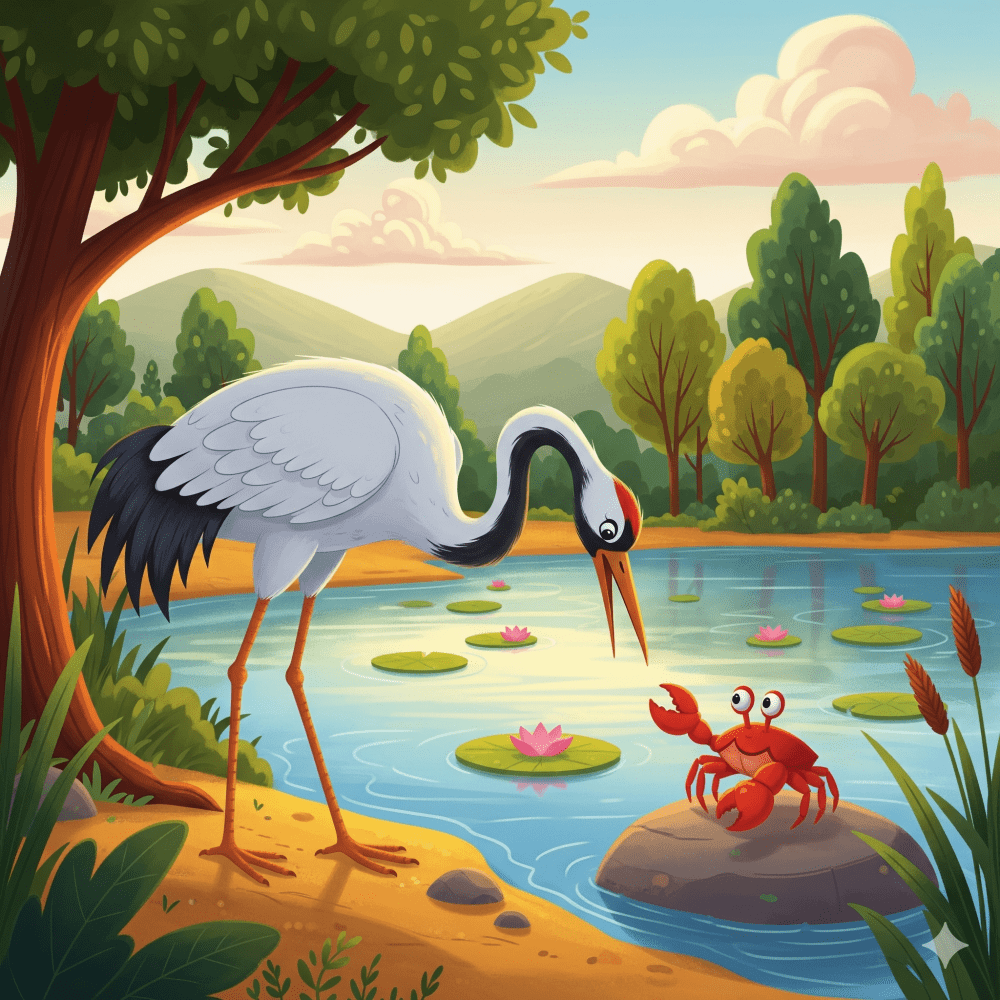
The crab studied the crane. “How will you carry me?” he asked.
“I’ll hold you in my beak,” the crane replied.
“That won’t do,” said the crab. “You might drop me! Let me hold onto your neck with my claws instead. That way, I’ll be safe.”
The crane agreed, and the crab climbed up, gripping tightly.
As they flew, the crab noticed they were not heading toward the big pond but toward a tall tree. “Friend Crane,” said the crab, “the pond is the other way.”
The crane chuckled. “Oh, the pond? I never planned to take you there. Didn’t you notice the pile of fish by the tree? I tricked them, and now I’ll trick you too!”
But the crab was not fooled. “Those fish may have trusted you,” he said, “but I won’t. If you don’t take me straight to the big pond, I’ll squeeze your neck until you do.”
The crane’s wings trembled. “All right, all right!” he said. He turned around and flew directly to the big pond. Gently, he lowered the crab to the soft mud at the water’s edge.
Just then, the spirit of the tree appeared. With a wave of his hand, the stranded fish that the crane had left on the riverbank were lifted into the cool, safe pond. The water rippled with joy as the fish darted about, free again.
The crab slid happily into the water and waved his claws. “Thank you, Crane,” he said. “But remember—trickery may seem clever, yet it never ends well. Honesty is always the safer path.”
From the branches of the tree, the spirit smiled. “The crab is right,” he said. “Tricks may work for a while, but in the end, wisdom and truth will always win.”
“The Crane and the Crab” by Nina D. Smith. Published by Bright Bunny Books © 2025. Retelling of “The Cruel Crane Outwitted’” from Indian Fairy Tales by Joseph Jacobs, originally published in 1892.
“The Crane and the Crab” is best for grades 3–5 because its clear characters, magical elements, and lesson about honesty versus trickery are easy for elementary students to understand, enjoy, and discuss.
Discussion Questions
- Why did the fish trust the crane, and what happened as a result?
- How did the crab’s clever thinking change the outcome of the story?
- What lesson does the spirit’s rescue of the stranded fish teach about fairness and kindness?
This content is provided under fair use for educational purposes only. Commercial use is strictly prohibited by the creator.
 Bright Bunny Books