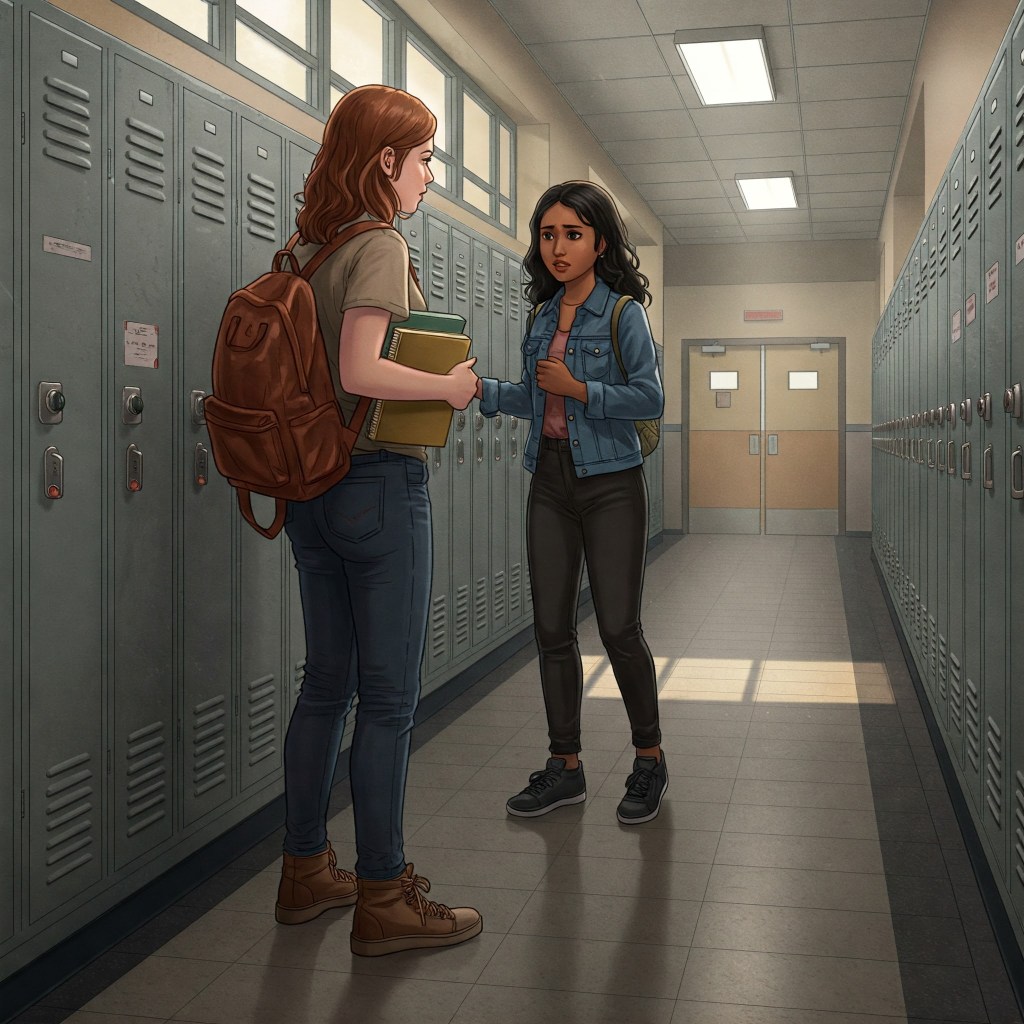
“Will you promise not to tell anyone, no matter what?” Dora asked.
Eva blinked. “I don’t know. I usually tell my mom everything.”
Dora rolled her eyes. “Then forget it. If you’re going to go running to your mom, I won’t tell you anything.”
Eva frowned. “It’s not running to her. I just trust her. She helps me figure things out.”
“Well, if you can’t keep a secret, you’ll never hear mine,” Dora snapped. Then she turned with a dramatic flip of her hair and walked away.
Eva sighed and went back to her book. She didn’t really want to know whatever drama Dora was cooking up—but a tiny part of her was curious. Especially when Dora had said it was something someone had said about her.
Still, Eva pushed it aside. She didn’t like gossip, and she definitely didn’t want to hear something mean that might mess with her head.
Eva was kind, outgoing, and thoughtful. She wasn’t loud or flashy, but people tended to notice her. She played violin in the school orchestra, edited the yearbook, and loved to draw. She had a strong sense of right and wrong and didn’t back down from standing up for people—even when it was hard.
Her best friend, Amy, was more reserved. She liked quiet things—books, painting, organizing playlists—and didn’t open up easily. Eva had worked hard to earn Amy’s trust. At first, Amy had been hesitant to get close. She’d had a rough time with friendships before and didn’t want to get hurt again. But Eva had been steady and sincere, and eventually, Amy let her in.
The two had been inseparable since.
That is, until Dora decided to stir the pot.
Dora always hovered around Eva at school—dropping compliments, trying to get paired up for projects, sliding into conversations uninvited. Eva was polite but never gave her much attention. It wasn’t that she disliked Dora; she just didn’t trust her. Dora had a habit of spreading drama, always whispering things that made people second-guess each other.
That week, Amy was covering a shift at the school library desk during lunch when Dora came in.
“Hey,” Dora said casually, flipping through a returned book. “You and Eva still hanging out all the time?”
Amy nodded. “Yeah. Why?”
“Oh, no reason,” Dora said. “Just surprised, I guess. Eva’s great and all, but… sometimes she makes weird comments.”
Amy narrowed her eyes. “What kind of comments?”
“I probably shouldn’t say,” Dora said, with a tone that meant she definitely would. “But I heard her say once that you were kind of a backup friend. You know, safe. Low-maintenance.”
Amy’s stomach sank. “What?”
“Don’t take it personally,” Dora added quickly. “I mean, she probably didn’t mean it in a bad way. But if someone said that about me? I’d be pretty hurt.”
Amy tried to shake it off, but the words kept echoing. Backup friend. Low-maintenance. It stung. She thought Eva valued her—really valued her.
The next morning, Amy walked right past Eva at their lockers without saying a word.
Eva blinked. “Amy? Hey—what’s up?”
“Nothing,” Amy said quickly, heading to class without looking back.
For the next two days, things stayed tense. Amy barely spoke. Eva was confused, worried, and hurt.
Finally, that Friday evening, Eva told her mom everything.
“She just stopped talking to me,” Eva said, frustrated. “I feel like I must’ve done something, but I don’t know what!”
Her mom thought for a moment, then said, “When a friendship is real, it’s worth fighting for. Maybe the best thing you can do is ask—honestly and kindly.”
The next day, Eva walked over to Amy’s house. Amy was in the garage painting a cardboard backdrop for a theater project.
“Can we talk?” Eva asked.
Amy paused, then nodded. Eva sat beside her on the edge of the workbench.
“Did I do something to upset you?” Eva asked. “I really don’t know, but I feel like you’ve been mad at me all week.”
Amy hesitated, then blurted, “Dora said you called me a backup friend. That I was easy to be friends with. That I don’t expect much.”
Eva stared. “What?! I never said that.”
“She said you did.”
Eva shook her head. “Okay. I remember what that was about. She was complaining that I never invited her over. I joked that not everyone is as chill as you. That you don’t expect constant attention or gifts or whatever. I was trying to get her to stop bugging me.”
Amy stared at her. “So it wasn’t some… label you put on me?”
“No! Are you kidding? I trust you more than anyone.”
Amy looked down at her paintbrush. “I should’ve just asked. I didn’t want to seem insecure.”
Eva nudged her shoulder. “We’re all insecure sometimes. But next time, please talk to me before letting Dora’s words get in your head.”
Amy smiled, embarrassed but relieved. “Deal.”
When they showed up at school Monday morning, Dora raised her eyebrows at the sight of them walking in together, laughing.
“So you two made up, huh?” she asked at lunch.
Eva smiled coolly. “There wasn’t really anything to make up.”
And that was the last time they gave Dora’s whispers more than a moment’s attention.
“Ignoring Dora” by Nina D. Smith © 2025. Retelling of “Dora, Or Won’t You Ever Tell?” from The School-Girls’ Treasury, or, Stories for Thoughtful Girls by Lucy Ellen Guernsey, originally published in 1870.
“Ignoring Dora” is best suited for readers in grades 7 or 8, as it explores realistic middle school dynamics—such as peer pressure, gossip, and friendship challenges—using accessible language, relatable characters, and emotional depth appropriate for upper elementary and early middle school students.
 Bright Bunny Books