Anna sat in the parlor, staring into the fire. The house was unusually quiet. The soft ticking of the clock and the occasional crackle of the fire were the only sounds. Outside, snow fell gently, blanketing the small New England town where she lived. The year was 1889, and most girls her age were expected to help run a household—but this was the first time Anna gently, blanketing the small New England town where she lived. The year was 1889, and most girls her age were expected to help run a household—but this was the first time Anna had been left in charge all on her own.
Her parents had taken her younger siblings to visit her grandfather in the countryside. She had stayed behind because her friend Lillie was supposed to visit for the week. They had made plans—ice skating, baking, even working on their sewing projects together. Anna had spent hours cleaning the guest room, preparing her favorite books, and even practicing some piano pieces to play for Lillie.
But instead of Lillie, a letter had arrived that afternoon.
Anna had opened it eagerly, her cheeks still pink from bringing in firewood. As she read, her smile faded. Lillie’s father had received sudden news—he had to travel overseas for business, and Lillie was going with him. She wouldn’t be coming to stay with Anna after all.
Now, the special supper Anna had prepared was getting cold. The little chocolate cake she had baked sat untouched on the table. Anna didn’t feel like eating. She didn’t feel like doing anything.
She curled up in her favorite armchair with a wool blanket and let herself sulk. “Everyone else is off doing something exciting,” she muttered. “And I’m stuck here, alone, for the whole week.”
She was startled by a knock at the kitchen door. It was Mrs. Alden, their neighbor from across the lane. She was carrying a small basket of apples and a steaming jar of soup wrapped in cloth.
“I thought you might enjoy a little something warm,” Mrs. Alden said with a kind smile. “I remember how quiet the house felt the first time I was left to myself.”
Anna forced a smile. “Thank you, but I’m not really hungry.”
Mrs. Alden stepped inside and looked around. “You’ve kept things tidy. That’s no small job in a big house like this.”
Anna shrugged. “It doesn’t feel like I’ve done much.”
Mrs. Alden sat down across from her. “It’s easy to feel that way when plans fall through. But you know, a quiet week can still be a meaningful one—if you decide to make it so.”
Anna looked into the fire. “I had everything planned with Lillie. And now, I don’t even know what to do.”
“Then don’t worry about the big picture just yet,” Mrs. Alden said. “Start small. Fix yourself a plate, read something you love, mend something old. Sometimes, doing just one thing leads to another.”
After Mrs. Alden left, Anna thought for a moment. She wandered into the spare room where she had placed a woven shawl her great-aunt had left behind. It was old and a bit threadbare, but the pattern had once been beautiful.
She began to carefully unravel the yarn, winding it into neat little balls.
By the next morning, Anna had decided to use the salvaged yarn to make a new shawl—a gift for Mrs. Williams, an elderly woman who lived at the care home. Mrs. Williams always seemed chilly and loved bright colors. Anna mixed the old yarn with blue and yellow skeins she found in the sewing basket.
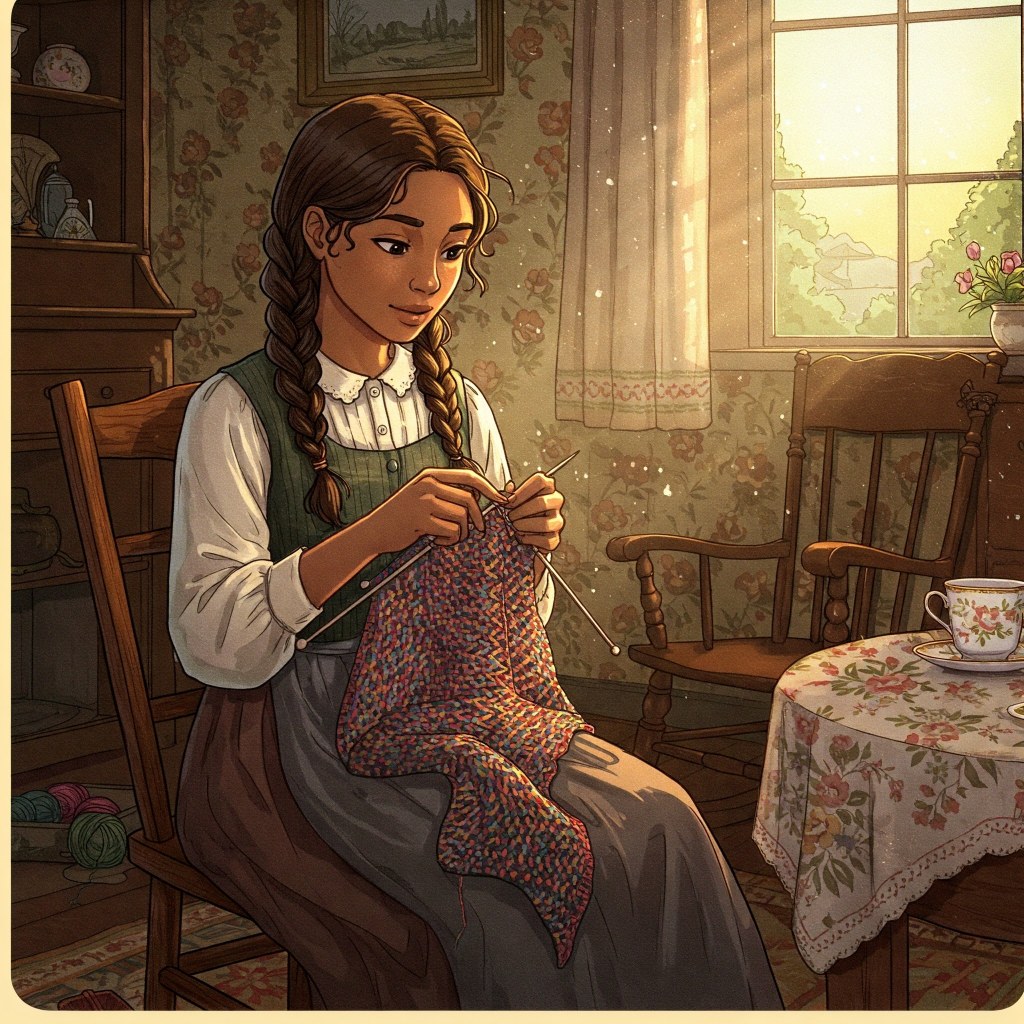
Each day, she made a small plan. She wrote a short entry in her notebook. She walked to the post office to mail a letter to her parents. She even delivered a slice of her chocolate cake to Mrs. Alden, who invited her in for tea and praised the stitching on her shawl.
On Thursday, Anna was surprised by another knock at the door.
It was Aunt Dorinda.
Aunt Dorinda was her father’s cousin and well known for her sharp tongue. She hadn’t been expected, but she announced she would stay two nights on her way to visit someone in town.
“You keep late hours for a girl your age,” Aunt Dorinda said after supper. “And I hope you’re not wasting your time on unnecessary needlework.”
Anna smiled politely. “I’m making something for Mrs. Williams. She gets cold easily, and her old shawl is falling apart.”
That night, as she folded the finished shawl, Anna touched the soft yarn and pictured Mrs. Williams wearing it. “She’ll like this,” she whispered. “It’s warm, and it looks cheerful.”
On Saturday, her family returned. The house quickly filled with laughter, chatter, and the scent of pine smoke. Anna listened to stories from her siblings, then told her own: about her project, her visit with Mrs. Alden, and the arrival of Aunt Dorinda.
Later, while helping her mother unpack, Anna looked around the parlor. It wasn’t just the same house she had started the week in—it now felt like something she had taken care of and added to.
She hadn’t had the week she expected. But she had found something better: a quiet confidence that came from doing small things well, even when no one was watching.
“Anna’s Week Alone” by Nina D. Smith © 2025. Retelling of ANNA, OR, “MAKE THE BEST OF IT” from The School-Girls’ Treasury or, Stories for Thoughtful Girls by Lucy Ellen Guernsey, originally published in 1870.
Enjoy this story? Read this story next: Raincheck Reality
 Bright Bunny Books