Every afternoon, Marcus walked down the street with a rake in one hand and work gloves in the other. He had a weekly job helping Mr. Bell, an elderly neighbor, clean up his backyard. It wasn’t complicated—pulling weeds, trimming bushes, and raking leaves—but it was steady, and Mr. Bell paid him ten dollars each week.
Marcus was saving up to buy a new pair of Falcon Runners before school started again. His mother had told him she could not afford them, but he could earn the money himself if he was serious about it. He was.
“I admire your consistency,” Mr. Bell told him one afternoon. “You follow through on what you start. That’s a rare quality.”
Marcus smiled. “I’m almost there. Just twenty more dollars to go.”
A few houses away lived Lawrence, a boy in Marcus’s grade who had a talent for avoiding effort. Lawrence had skipped most group projects, missed every soccer practice, and always found a reason not to mow his parents’ lawn.
One afternoon, Marcus passed by and saw Lawrence lounging on his front porch with a popsicle in one hand and his phone in the other.
“Why do you spend your whole summer doing yard work?” Lawrence asked.
“Because I want those Falcon Runners,” Marcus replied. “And I’m not asking my mom to buy them.”
Lawrence shrugged. “My uncle said he might get me a pair for my birthday. So why would I waste my time pulling weeds?”
Marcus didn’t answer. He kept walking.
A few days later, Mr. Bell told Marcus he would be out of town for two weeks. “You’ve earned a break,” he said. “Thanks again for all your help.”
Without his usual job, Marcus spent the week helping his mom organize the garage and studying for the upcoming math placement test. He was still twenty dollars short of his goal.
That Friday, Marcus heard about a neighbor who needed help moving boxes into a storage unit. “It’s a one-time job,” the man explained. “Twenty dollars cash. But I need someone who’s going to show up and do the work.”
Marcus mentioned it to Lawrence later that day.
“You should take it,” Marcus said. “It’s easy money.”
Lawrence grinned. “Just move boxes? I could do that in my sleep. I’ll message the guy.”
Saturday morning came. Marcus saw the neighbor waiting in his driveway at 9:30 a.m., looking frustrated.
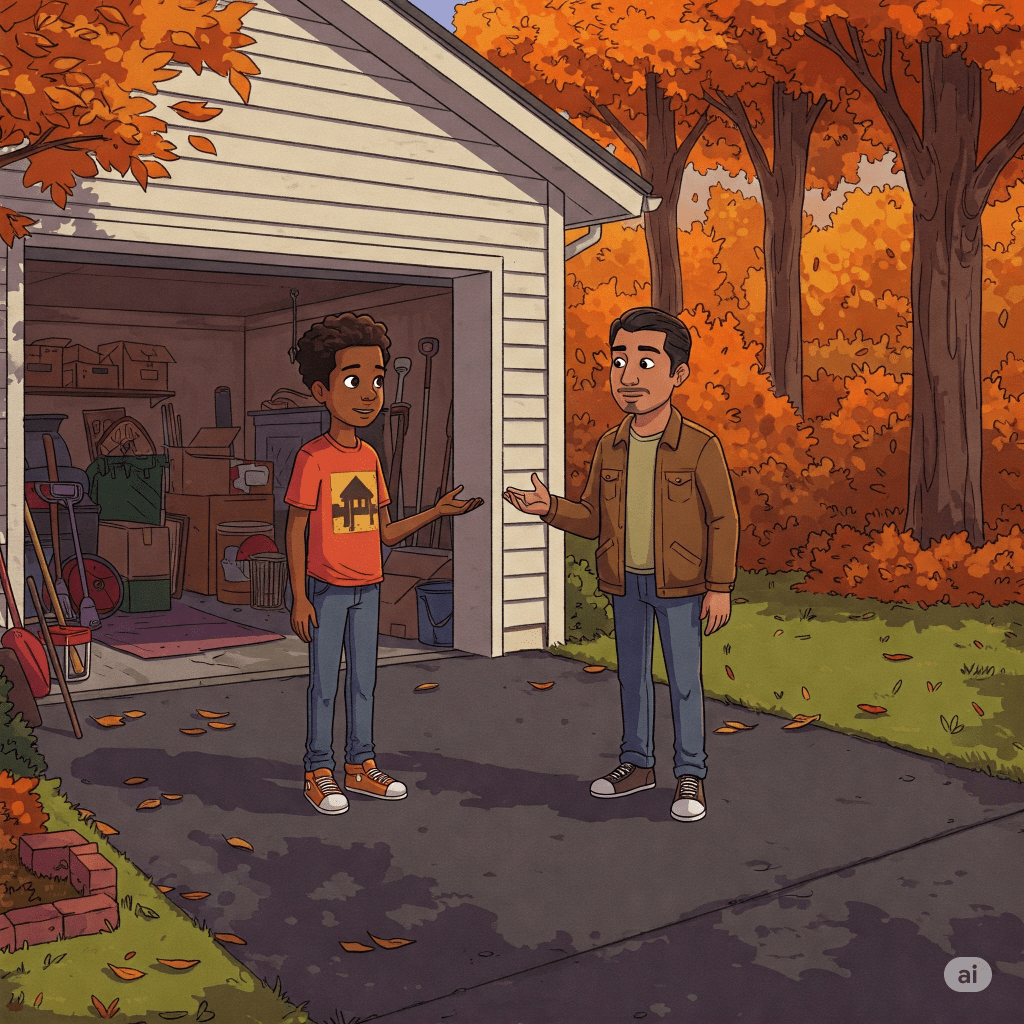
“You seen Lawrence?” he asked. “He agreed to help, but he hasn’t shown up.”
Marcus checked the time. “I can help, if you still need someone.”
“Would you? That’d be great.”
By early afternoon, the job was done. Marcus had not only earned the promised twenty dollars, but the neighbor also gave him an extra five for being respectful and efficient.
Later that day, Marcus passed by Lawrence’s house again. Lawrence was still in pajamas, playing video games in the living room.
“I thought you had a job this morning,” Marcus said.
Lawrence didn’t look up. “I stayed up too late. Didn’t feel like it.”
“You know I did it instead, right?”
Lawrence smirked. “Cool. I’m not worried about it.”
A week later, school started. Marcus wore his new Falcon Runners. They weren’t flashy, but they were high quality, and he had earned them entirely on his own.
Lawrence arrived in his old sneakers, scuffed and worn at the heels.
“I thought your uncle was giving you new shoes,” Marcus said.
Lawrence frowned. “He changed his mind. Got me a hoodie instead. Said I should learn how to earn things myself.”
Marcus raised his eyebrows. “He’s not wrong.”
Lawrence didn’t reply.
That afternoon, their teacher announced a school field trip. “All students must return a signed form and the twenty-five dollar fee by Friday if they wish to attend,” she said.
As the students packed up to leave, Lawrence turned to Marcus. “Hey. Do you think Mr. Bell still needs help with his yard?”
“Lawrence the Slacker” by Bright Bunny Books © 2025. A retelling of “Lazy Lawrence” from The Fireside Story Book by Maria Edgeworth originally published in 1847.
“Earned Not Given” is best suited for students in grades 5–7, offering age-appropriate language and relatable themes about responsibility, work ethic, and learning the value of earning things through effort.
 Bright Bunny Books